
Choosing the Right Cleaning Equipment for Commercial Kitchens
Running a commercial kitchen is about much more than preparing delicious food. Behind the scenes, maintaining a spotless and sanitary environment is one of the biggest factors in a restaurant’s success. The Food Hygiene Rating System is one of the most visible measures of this, with every cafe, restaurant, or
Running a commercial kitchen is about much more than preparing delicious food. Behind the scenes, maintaining a spotless and sanitary environment is one of the biggest factors in a restaurant’s success. The Food Hygiene Rating System is one of the most visible measures of this, with every cafe, restaurant, or takeaway given a score between 0 and 5 after inspection. Encouragingly, most establishments in the UK achieve a score of 4 or 5, yet around 4% of outlets still score only 1, meaning major improvements are needed.
That matters because research shows that 64% of diners consider cleanliness one of the most important factors when choosing where to eat, and a huge 82% say they would actively avoid a venue with a hygiene rating of 2 or below. In other words, no matter how talented your chefs are, poor hygiene will quickly drive customers away and could even risk closure.
Cleanliness in a commercial kitchen is not just about appearances or customer perception, however. It is central to food safety, regulatory compliance, equipment maintenance, and overall operational efficiency. And to achieve this consistently, having the right cleaning equipment and knowing how to use it, is essential.
The Importance of Commercial Kitchen Cleaning
It’s critical to keep your kitchen equipment sparkling clean for many reasons:
- Protecting food safety – Regular cleaning reduces the risk of bacteria, mould, and other harmful microbes from living on surfaces or equipment.
- Extending equipment lifespan – Routine maintenance helps your appliances and utensils last longer, helping to lower repair costs and avoid unexpected downtime.
- Boosting efficiency – Clean cookware performs better; greasy or grimy equipment slows things down, adding stress when you’re busiest.
- Meeting legal standards – Compliance with cleanliness standards is crucial to avoid fines or closures. Commercial kitchens are subject to rigorous health inspections.
The Essential Cleaning Supplies for Commercial Kitchens
It’s important to build a toolkit of cleaning products that are designed for professional use. Let’s take a closer look at the essentials, where they’re most useful, and how to use them effectively.
2
Food-Safe Disinfectants
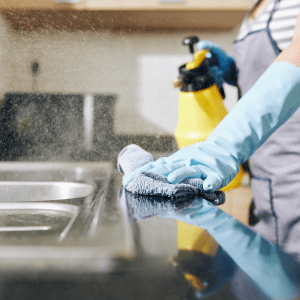
These are the backbone of any commercial kitchen cleaning routine. Food-safe disinfectants are specifically formulated to be safe on surfaces that come into direct contact with food, such as preparation counters, chopping boards, and utensils.
To use them effectively, apply the disinfectant evenly, leave it for the recommended dwell time (usually between 30 seconds and a minute), and then either rinse or allow it to air dry. This step ensures harmful microbes are eliminated without leaving chemical residues behind.
3
Degreasers
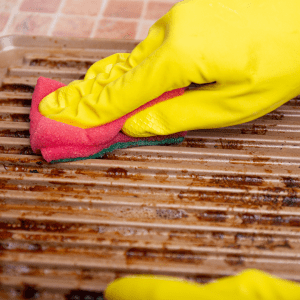
Grease is the biggest cleaning challenge in most commercial kitchens. It clings to oven hoods, fryers, grills, and range tops, and once it hardens it can be extremely difficult to remove. Degreasers are designed to break down this build-up quickly.
Apply them to cool surfaces, leave them to work for a few minutes, then scrub with a non-abrasive brush or cloth before rinsing thoroughly. Used regularly, degreasers not only keep surfaces looking clean but also improve fire safety by reducing the risk of grease-related flare-ups.
4
5
Kitchen Sanitisers
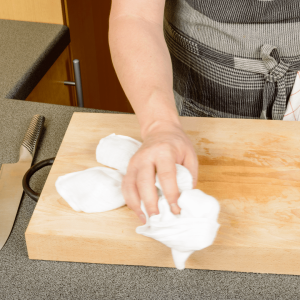
While disinfectants are effective at killing bacteria, sanitisers are used after cleaning to provide an additional layer of protection. They are particularly useful for utensils, chopping boards, and areas that need to be safe for immediate food preparation.
Many sanitisers can be diluted in warm water and used as a rinse or soak, an easy way to keep equipment hygienic during busy service periods.
6
Oven & Grill Cleaner
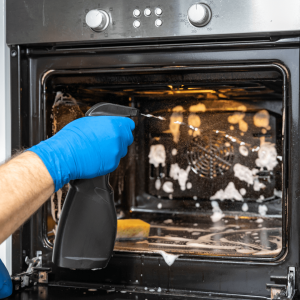
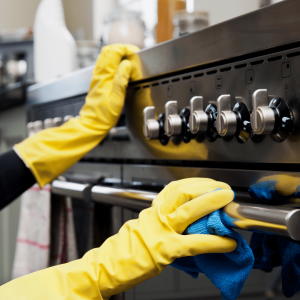
Grills and ovens are some of the toughest areas to keep clean. As they quickly build up grease, carbon deposits, and burnt-on food. A specialist grill and oven cleaner is designed to cut through this heavy residue, restoring cooking surfaces and improving performance.
To use, apply to cooled surfaces, leave for a few minutes to break down grime, then scrub and rinse thoroughly. Regular use not only keeps equipment hygienic and presentable but also helps prevent smoke hazards and extends appliance life.
7
Appliance-Specific Cleaners
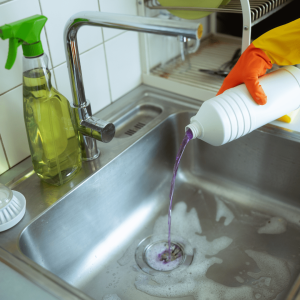
Some parts of a commercial kitchen need more specialised care. For instance, drains often become clogged with grease, food waste, and debris, leading to unpleasant odours and potential blockages. Drain cleaners are formulated to cut through this buildup, but always handle them with care and wear protective gloves.
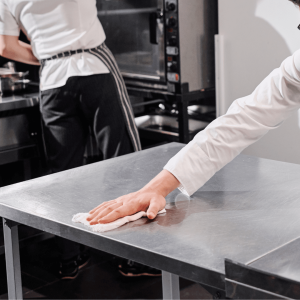
Stainless-steel cleaners, on the other hand, are designed for fridges, dishwashers, and prep counters. They help maintain a polished, streak-free appearance, which not only looks professional but also makes surfaces easier to wipe down.
8
Cloths, Sponges, & Brushes
No cleaning kit is complete without the right tools. Cloths and sponges should be colour-coded to avoid cross-contamination, for example, using blue cloths for food preparation areas and red ones for washrooms.
Brushes with stiff bristles are ideal for scrubbing ovens, grills, or tiled floors, while softer brushes are better for delicate surfaces. Whatever you choose, remember to wash or replace them regularly to keep them hygienic.
9
Protective Gloves
When using strong chemicals like degreasers or drain cleaners, protective gloves are essential. They not only prevent skin irritation but also make it easier to handle hot water and cleaning solutions safely. Disposable gloves are useful for quick jobs, while heavy-duty reusable ones are ideal for longer cleaning sessions.
0
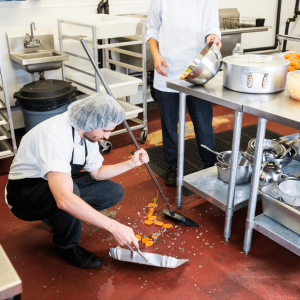
Waste Bins
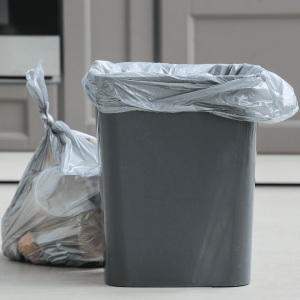
Finally, keeping waste under control is an important part of maintaining hygiene. Sturdy plastic waste bins with lids are best for food waste, as they prevent odours and help deter pests. Make sure bins are emptied regularly and lined with bags for quick and easy disposal.
1
Deep Cleaning and Scheduling
Even with daily cleaning routines in place, commercial kitchens require professional deep cleaning on a regular basis. Industry guidance recommends deep cleans at least once every three months for high-volume kitchens such as fast-food outlets or school canteens. And at least twice a year for smaller operations. A thorough deep clean targets hidden areas like behind appliances, under counters, and inside ventilation systems, spots that are often missed during day-to-day routines. Not only does this help maintain hygiene standards, but it also reassures health inspectors that your establishment takes cleanliness seriously.
Our Latest News
View newsHow to Update Your Autumn/Winter Table with the New GenWare Collection
As autumn arrives, it is the perfect time to give your tables a seasonal refresh. Almost half (49%) of
View articleThe Best Bowls for Serving Soups, Stews & Winter Menus
As autumn arrives, soups, stews and warming dishes start returning to menus across the UK. Soup is the UK’s
View articleSchool & University Catering Equipment: What Do You Need for the New Academic Year?
The new academic year brings millions of students back to schools, colleges and university campuses across the UK. In higher
View article